

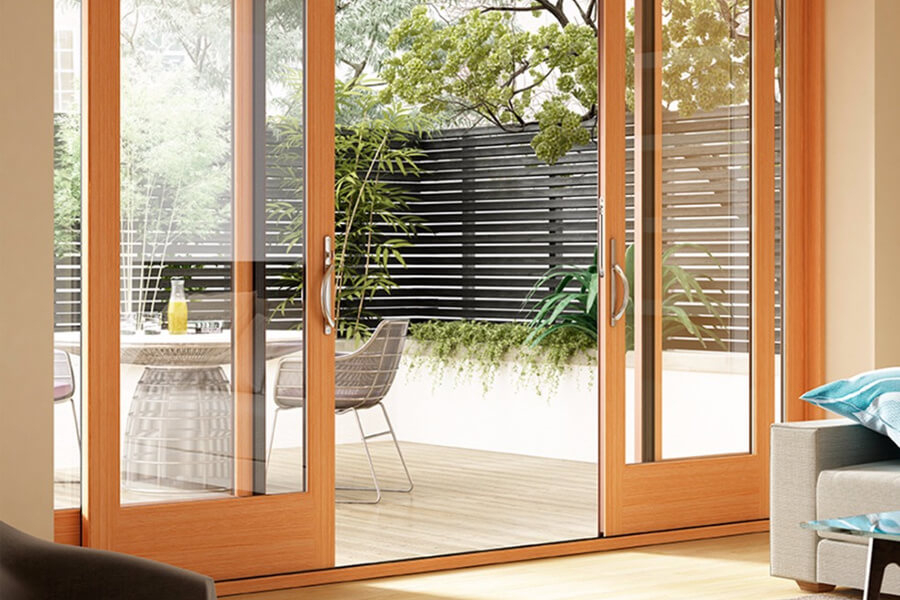
Your patio doors do more than connect your home to the outdoors. They hold in heat, block coastal wind, keep out intruders, and set the visual tone for your living space. But like any part of your home, they wear out. If you’ve been noticing drafts, sticky frames, or foggy glass, your doors may be telling you something important. Here’s how to know when it’s time to replace your patio doors — and why acting sooner can save you money and stress in the long run.
Signs That It’s Time to Replace Patio Doors in Monterey
Monterey’s climate is tough on doors. The salt air, marine layer, and shifting temperatures put extra wear on frames, seals, and hardware. Watch for these warning signs:
- Drafts or air leaks around the frame. If you can feel a breeze when the door is closed, the weatherstripping or frame seal has failed.
- Condensation between the glass panes. This means the insulated glass unit (IGU) seal has broken. Once moisture gets inside the glass, the insulation is gone — and it won’t fix itself.
- Difficulty opening, closing, or locking. Sticking or misalignment points to frame warping or hardware failure. A door that doesn’t lock properly is a security risk.
- Visible frame damage. Rot, rust, or cracks — especially on wood or older aluminum frames — compromise both insulation and structural integrity.
- Rising energy bills. If your heating or cooling costs have crept up without explanation, failing patio doors could be a culprit.
Any one of these issues is worth addressing. Multiple issues together? That’s a strong case for full replacement.
How Patio Door Replacement Improves Energy Efficiency
Older patio doors, especially those with single-pane glass or degraded seals, are energy sieves. Modern replacement doors are built differently.
Today’s patio doors use double- or triple-pane glass with argon or krypton gas fills. Low-E coatings reduce heat transfer without blocking natural light. Thermally broken frames prevent conduction between inside and outside surfaces.
In a coastal climate like Monterey’s, where foggy mornings give way to afternoon sun, good thermal performance makes a real difference. You’ll spend less on heating and cooling, and your home will feel more comfortable year-round.
Look for doors that meet ENERGY STAR® standards for the Pacific/Southern climate zone. That label confirms the product performs at a level that will actually move the needle on your utility bills.
Which Type of Patio Door Is Right for Your Home?
When you replace patio doors, you’re also choosing a style. The three most common options each have distinct advantages:
Sliding patio doors are the most space-efficient. The panel glides on a track, so there’s no swing arc to worry about. Great for smaller patios or tight interior layouts.
French doors (hinged, swinging out or in) offer a classic look and a wider, unobstructed opening. They work well when you have the clearance and want a more traditional aesthetic.
Bifold or multi-slide doors open up an entire wall, blending your indoor and outdoor spaces. They’re a popular choice for entertainment-focused homes or those with ocean or garden views.
The right choice depends on your floor plan, how you use the space, and your design goals. A professional consultation helps you weigh the trade-offs before committing.
What to Expect from a Professional Patio Door Installation
Replacing patio doors isn’t a standard DIY project. The opening needs to be properly measured, the frame needs to be level and square, and the flashing must be correctly applied to prevent water intrusion. In Monterey’s wet winters, a poor installation can lead to water damage behind the walls, often invisible until it becomes expensive.
A professional installer will also ensure the door meets local building codes and, if applicable, pull any required permits. When you replace patio doors as part of a larger remodel, coordinating with other trades matters too.
Ask your installer about warranties, both the product warranty from the manufacturer and the labor warranty from the installation team. Quality companies stand behind both.
FAQs: Replacing Patio Doors in Monterey
How long do patio doors typically last before they need to be replaced? Most patio doors last 20 to 30 years with proper maintenance. However, doors in coastal climates like Monterey’s may show wear sooner due to salt air exposure. If yours are approaching 15–20 years old and showing any of the signs above, it’s worth getting an assessment.
Is it better to repair or replace a patio door? Minor issues, like worn weatherstripping or a sticky latch, are worth repairing. But if the frame is warped, the glass seal is broken, or the door is chronically hard to operate, replacement is usually more cost-effective than repeated repairs. A professional can help you make that call.
What’s the best patio door material for a coastal home in Monterey? Fiberglass and vinyl frames hold up well against salt air and humidity. They resist corrosion, don’t warp, and require minimal maintenance. Wood-clad options can also work but need more upkeep. Bare aluminum frames without a thermal break are generally not recommended for energy efficiency in this climate.
Ready to Replace Your Patio Doors? Start with a Consultation.
If any of the warning signs in this post sound familiar, don’t wait until the damage worsens. At Glassworks by Design Inc., we help Monterey homeowners choose and install patio doors that perform beautifully for years to come, energy-efficient, secure, and tailored to your home’s style. Contact us today to schedule a free consultation and find out which door solution is the right fit for you.
Posted on May 16, 2026 | Published by Ignite Local | Related Local Business